
Every countertop shop owner eventually asks the same question: why am I paying so much for leads that do not turn into jobs? You crank up the ad budget, the phone rings a little more, but the math never seems to work. The culprit is almost always your cost per lead — the amount you spend in marketing to get one homeowner to raise their hand.
The encouraging part: cost per lead (CPL) is one of the most controllable numbers in your business. Small, specific fixes to your landing pages, targeting, and tracking can cut it dramatically — often in half — without spending a dollar more. This guide walks through exactly how to lower your cost per countertop lead, with realistic CPL ranges so you know what good actually looks like.
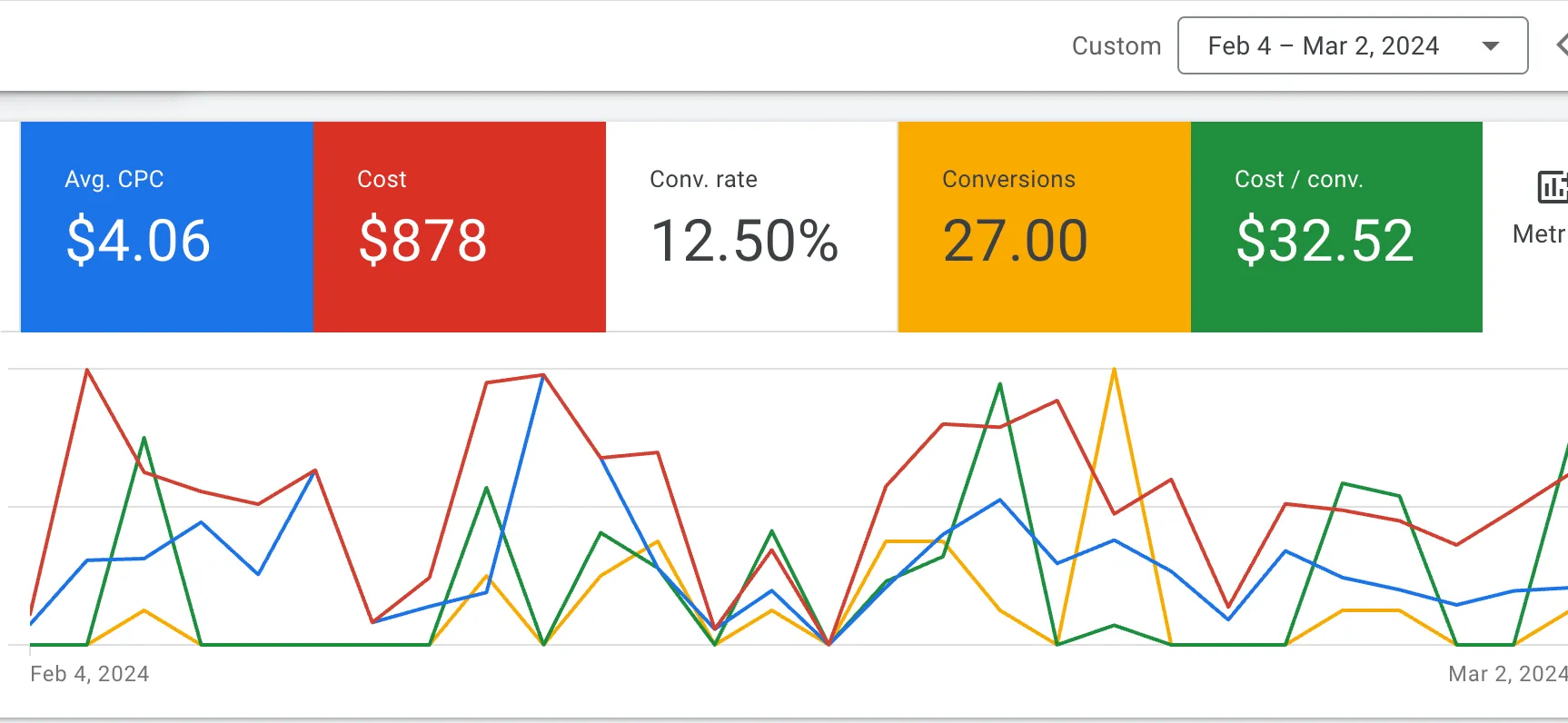
What is a good cost per countertop lead?
Before you can lower CPL, you need a benchmark. For most stone fabricators, a healthy cost per lead lands somewhere between $40 and $150. Local Service Ads and mature Local SEO tend to deliver leads near the low end, while competitive Google Search Ads in dense metros can push toward the high end.
But the raw number means little on its own — what matters is CPL relative to your job value and close rate. If your average countertop job nets $4,000 in profit and you close one in four leads, a $120 lead still delivers a roughly 800% return. Always judge CPL against the revenue it produces, not in a vacuum.
The wide CPL range above exists because most shops leave easy money on the table. The fabricators paying $150 a lead and the ones paying $50 are often running the same ads in the same market — the difference is the landing page, the targeting, and the tracking behind those ads. Let us fix each one.
Fix your landing pages first
The fastest way to lower CPL is not in your ad account at all — it is the page your ad sends people to. Send a homeowner who clicked “quartz countertops near me” to your cluttered homepage and most of them bounce. Send them to a focused landing page built for that one intent, and a far higher share become leads. Double your conversion rate and you cut your CPL in half on the spot.
A high-converting countertop landing page has:
- One clear headline that matches the ad and one obvious goal: get a free quote.
- A fast load — under three seconds — so mobile clicks do not bounce.
- A striking gallery of finished installs that proves your quality.
- Reviews and trust badges sitting right next to the quote form.
- A short form and a click-to-call button visible without scrolling.
The cheapest CPL win there is
Before you touch a single bid, ask: where does my ad traffic land? If it is your homepage, build a dedicated landing page for your top ad group. Fabricators routinely see conversion rates jump from 3% to 8% or more with this one change — which can cut cost per lead by more than half without raising the budget a dime.
Tighten your targeting
Wasted spend is wasted CPL. Every dollar that goes to a click outside your service area, on the wrong keyword, or from someone who will never buy drives your cost per lead up. Tightening your targeting plugs those leaks:
- Geographic targeting — limit ads to the cities and zip codes you actually serve and profitably travel to.
- Keyword intent — bid on buyer terms like “quartz countertop installation” rather than broad terms like “countertops.”
- Negative keywords — block “DIY,” “jobs,” “wholesale,” and other terms that bring tire-kickers.
- Schedule — concentrate budget during the hours your team can actually answer the phone.
Tighter targeting means fewer clicks, but a much higher share of them turn into real leads — which is exactly how CPL comes down.
Raise your Google Quality Score
Google rewards relevant ads with cheaper clicks. Your Quality Score — a rating from 1 to 10 based on click-through rate, ad relevance, and landing page experience — directly affects what you pay per click. Push your Quality Score up and Google literally charges you less for the same position, which flows straight through to a lower CPL.
To improve Quality Score:
- Group tightly related keywords so each ad speaks directly to its search.
- Write ad copy that includes the exact keyword and the homeowner's benefit.
- Match your landing page content to the ad — same material, same offer, same promise.
- Keep that landing page fast and mobile-friendly, which Google factors into the score.
Paying too much for countertop leads?
We build conversion landing pages and tightly targeted campaigns that drive your cost per lead down and your booked jobs up. Book a free growth call for a CPL audit.
Schedule a Free AppointmentBalance your channel mix
Leaning on a single channel almost always means a higher CPL than necessary. Paid search delivers leads today but you pay for every one; Local SEO costs more upfront but drives your blended cost per lead down as it compounds. The smartest shops run a balanced mix:
- Local SEO & Google Business Profile — the lowest long-run CPL, since ranked leads keep coming without per-click cost.
- Local Service Ads — pay per lead, not per click, with the Google Guarantee driving strong conversion.
- Google Search Ads — instant, high-intent leads to fill the gap while SEO matures.
- Reviews & reputation — they lift conversion on every other channel, lowering CPL across the board.
As your organic and Map Pack leads grow, they dilute your blended CPL — letting you scale without your average cost per lead climbing.
Track every lead to its source
You cannot lower a number you cannot see. Most fabricators have no idea which ad, keyword, or channel actually produced each call — so they cannot tell the $50 leads from the $200 leads, and they keep funding both. Lead tracking ends the guesswork:
- Use call tracking numbers so every phone lead is attributed to its source.
- Tag form submissions by campaign and landing page.
- Pipe every lead into a simple CRM so nothing slips and you can measure close rates.
- Review cost per lead by channel monthly — pour budget into the winners, cut the losers.
Once you can see CPL by source, lowering it becomes obvious: stop paying for what does not convert and reinvest in what does.
Lower CPL without sacrificing lead quality
A word of caution: the goal is a lower cost per qualified lead, not just cheaper clicks. It is easy to slash CPL by chasing the cheapest possible traffic — and end up buried in tire-kickers who never book. That is a false saving. The real win comes from relevance: better targeting, better landing pages, and better tracking that bring you more of the homeowners who actually become jobs.
This is also why exclusive leads beat shared ones. A shared lead sold to four shops forces a price war and a low close rate, quietly inflating your true cost per booked job. An exclusive lead you generated and own closes far more often — so even at a similar headline CPL, your cost per job is much lower.
CPL is only half the equation
Always pair cost per lead with close rate and job value. A $60 lead that never closes is more expensive than a $130 lead that books a $5,000 kitchen. Tie marketing to revenue, not vanity metrics, and optimize for cost per booked job — that is the number that actually pays your bills.
Putting it into action
Lowering your cost per countertop lead is rarely about one magic lever — it is the compound effect of several fixes. Start with the cheapest, highest-impact one: build a focused landing page for your top campaign. Then tighten your targeting, lift your Quality Score, balance your channel mix, and track every lead to its source so you can keep cutting waste.
Do that consistently and a $150 lead becomes a $70 lead — at the same budget, with better-qualified homeowners. That is the kind of system we build for countertop shops: every dollar tracked, every channel optimized, and a cost per lead that keeps falling as your booked jobs climb.