
Few products are as inherently scroll-stopping as a freshly installed waterfall island in honed marble or a dramatic quartzite slab with movement that looks like a painting. Countertops are a visual, emotional purchase — and that makes social media one of the most natural marketing channels a stone fabricator has. The problem is that most shops treat it like a dumping ground for the occasional job photo, then wonder why it never produces leads.
Done right, Instagram, Pinterest, and Houzz do three things at once: they show off your craftsmanship, they build the trust that turns a stranger into a buyer, and they reach homeowners at different stages of the remodeling journey. This guide breaks down exactly how to use each platform to fill your showroom and your schedule — not just your follower count.
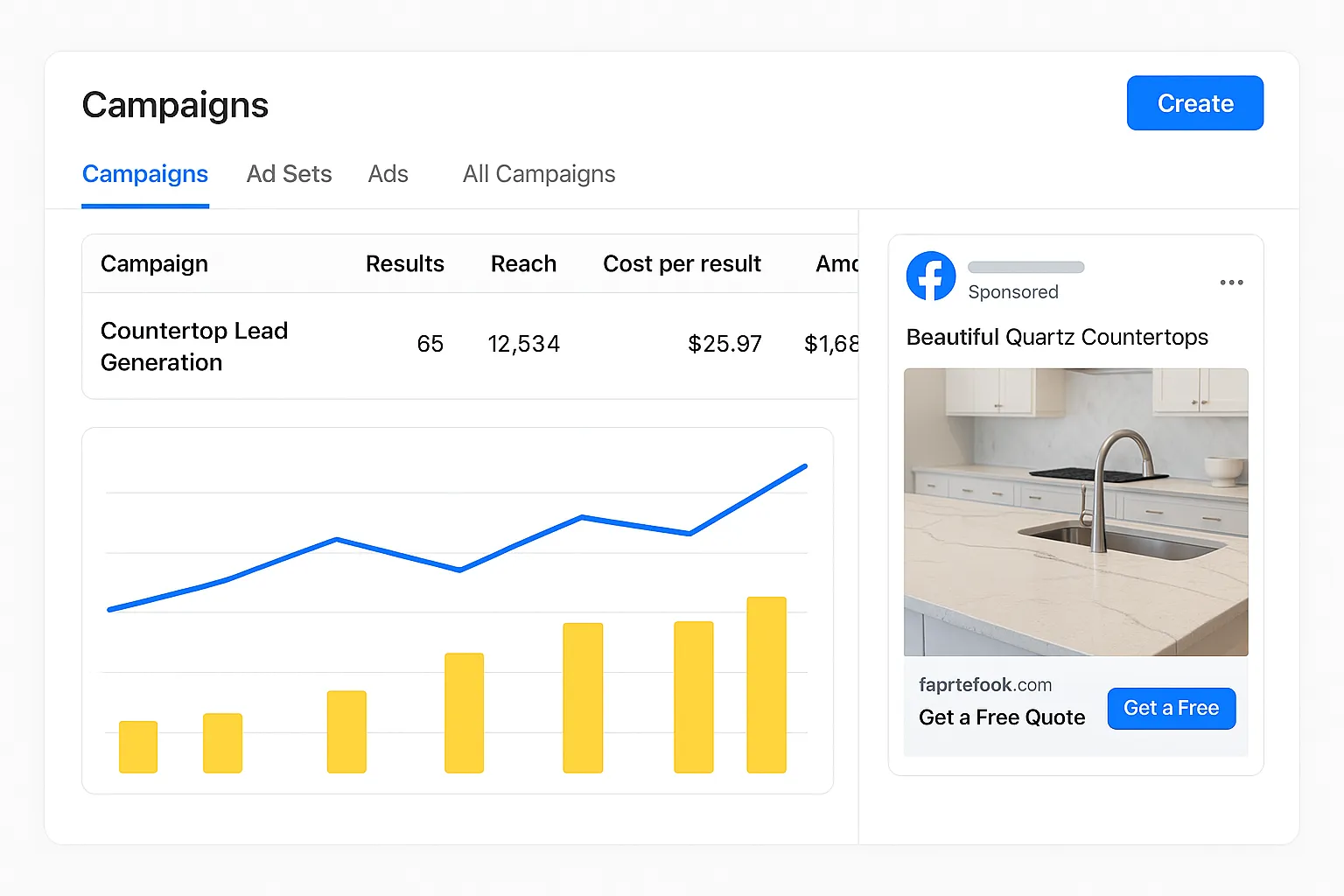
The opportunity is clear: be where buyers are already looking, post work that proves you are the premium choice, and make it effortless to take the next step. Let us go platform by platform.
Instagram: reels and before-and-afters that stop the scroll
Instagram is the best place for most fabricators to start. It rewards video, it has enormous local reach through hashtags and geotags, and it is where younger homeowners — the ones remodeling right now — actually hang out. The content that works is rarely polished or corporate; it is real, satisfying, and proof of skill.
- Before-and-after reels — a tired laminate kitchen transformed into honed quartz in 15 seconds. This is your single highest-performing format.
- Process and detail shots — close-ups of a mitered edge, a perfectly matched seam, or veining that flows across a backsplash. Craftsmanship sells premium.
- Time-lapse installs — a template-to-finish clip set to music shows competence and builds anticipation.
- Slab-yard content — film new exotic slabs as they arrive; people love seeing the raw material before it becomes their counter.
The secret to local reach is pairing broad material hashtags with location tags. Use a mix like #quartzcountertops and #kitchenremodel alongside your city and metro tags, and add a geotag to every single post so your work surfaces when nearby homeowners browse content from your area.
Quick win
Film every install. Have your crew shoot a few seconds of the old counter coming out and the new one going in, every time. One 20-second before-and-after reel per week — captioned with the material, the city, and a "book a consultation" line — will outperform months of polished but generic posts.
Pinterest: reach buyers while they are still planning
Pinterest is not a social network so much as a visual search engine for planning. Homeowners build kitchen and bath boards months before they hire anyone — which means you can plant your work in front of a buyer long before your competitors even know they exist. It is also one of the most underused platforms in the stone industry, so the field is wide open.
- Create boards organized by the way buyers think: "Quartz Kitchen Ideas," "Bold Quartzite Islands," "White Marble Bathrooms," "Outdoor Kitchen Countertops."
- Pin tall, vertical images of finished projects with keyword-rich descriptions — Pinterest reads that text to decide who sees your pins.
- Link every pin back to a relevant page on your site, so a saved idea becomes a website visit and, eventually, a quote.
- Lean into trends and seasons: remodeling intent spikes in late winter and spring, so fresh content then pays off.
Because pins keep resurfacing for months and even years, Pinterest is a compounding asset — much like SEO. The work you pin today can still be driving showroom traffic next remodeling season.
Houzz: the highest design intent of any platform
If Instagram is discovery and Pinterest is planning, Houzz is decision. People on Houzz are actively scoping a renovation, saving inspiration to ideabooks, and shortlisting professionals to contact. That makes a strong Houzz presence one of the most direct sources of design-driven, retail inquiries a fabricator can build.
- Complete your professional profile fully: service area, specialties, and a clear description that speaks to homeowners, not other tradespeople.
- Upload your best project photography — properly lit, full-room shots that show the countertop as the hero.
- Request reviews from happy clients; Houzz buyers weigh them heavily when choosing who to message.
- Engage with the design community and connect with local kitchen designers and remodelers who source on Houzz.
Posting a lot but booking little?
We turn social attention into booked measures with a content system tied to real revenue — not vanity metrics. Book a free growth call and we'll map it out.
Schedule a Free AppointmentBuild a content system you can actually sustain
The number one reason fabricators give up on social is that it feels like a never-ending content treadmill. The fix is a simple, repeatable system that turns the work you are already doing into a steady stream of posts:
- Capture at the source. Make filming installs and photographing finished jobs a standard part of your crew's checklist, not an afterthought.
- Batch your editing. Set aside one block each week to cut reels, write captions, and schedule everything at once.
- Repurpose ruthlessly. One install becomes an Instagram reel, a Pinterest pin, a Houzz project, and a website gallery image.
- Keep a simple content menu. Rotate through before-and-afters, detail shots, education, reviews, and behind-the-scenes so you never stare at a blank screen.
A handful of strong posts per week, kept consistent, will beat a heroic burst followed by three silent months every time. Algorithms reward reliability, and so do the buyers watching to see if you are still in business.
Tie it to revenue, not likes
Vanity metrics like follower count feel good but pay no bills. Track the numbers that matter: profile-link clicks, DM inquiries, consultation requests, and how many of those become booked jobs. If a content type drives appointments, do more of it; if it only earns likes, deprioritize it.
Putting it all together
You do not need to master every platform at once. Start with Instagram and a weekly before-and-after reel, add Pinterest to capture early-stage planners, and build a complete Houzz profile to win the high-intent design buyer. Keep the system simple, point everything at a clear next step, and follow up fast.
The fabricators who win on social are not the ones with the most followers — they are the ones who turn attention into booked measures and premium projects, consistently. That is exactly the kind of system we build for stone shops: a social presence that does not just look good, but ties directly to revenue.
Turning followers into booked countertop jobs
Content gets attention; your funnel turns attention into revenue. Too many shops nail the posting and drop the ball on conversion. Close the loop with a few non-negotiables:
This is where social stops being a hobby and becomes a channel. When every post has a job to do and every inquiry is followed up fast, your feed turns into a predictable source of premium, high-value projects.